

In the food industry, every gram matters. Yet a significant share of production losses does not come from defects, but from intentional excess. According to the FAO, nearly 14% of food produced worldwide is lost between harvest and distribution.
In this context, controlling raw materials has become a strategic challenge. On production lines, overfilling — often used as a safety margin — represents one of the most discreet… but also one of the most recurring costs.
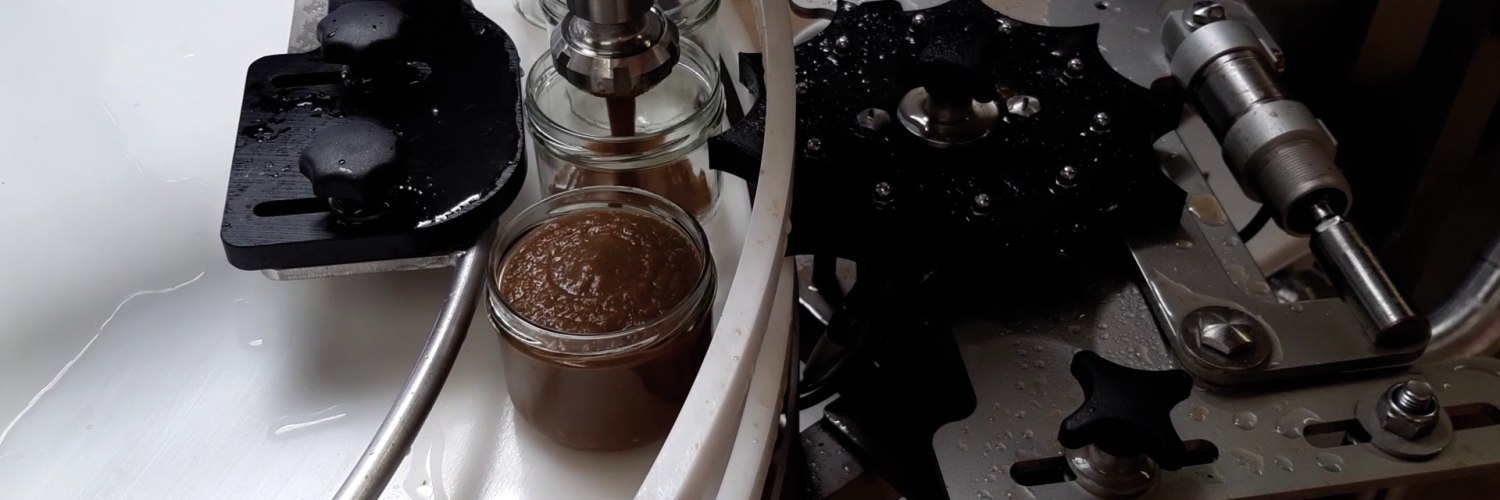
1. Overfilling: A Safety Margin That Became an Industry Standard
In many production environments, overfilling is not considered an anomaly, but rather an accepted practice. Faced with regulatory constraints, quality requirements, and product variability, production teams often adopt a cautious approach. Adding a margin helps avoid underweight products, but it also creates a constant imbalance throughout production.
This situation is often caused by raw material variability, texture changes during production, or a perceived lack of consistency from the equipment itself. In addition, many lines still rely heavily on operator adjustments. Over time, this safety margin becomes embedded in production settings and is rarely questioned.
2. An Invisible Cost… With Exponential Impact at Industrial Scale
Taken individually, a slight excess may seem insignificant. But at the scale of an industrial production line, its impact becomes considerable. Overfilling leads to increased raw material consumption, higher production costs, and reduced profitability on every unit produced.
When multiplied by production speeds, the number of lines, and annual volumes, this phenomenon can represent several tons of product lost each year. Unlike waste or production downtime, this cost often remains invisible. It gradually becomes part of standard operating habits without being identified as a loss in its own right.
3. Reducing Overfilling: The Celtech Approach
Reducing overfilling is not simply about adjusting a parameter. It requires securing production differently, with equipment capable of delivering consistent and repeatable performance.
At Celtech, this approach is based on controlling product behavior and ensuring dosing stability. Our solutions are designed to provide homogeneous distribution, even with complex or heterogeneous preparations. By integrating the specific characteristics of the product — texture, viscosity, or inclusions — it becomes possible to maintain high accuracy without relying on a safety margin.
Our sales and technical teams also support manufacturers in analyzing and optimizing their processes, helping identify concrete opportunities for performance improvement.
This global approach allows manufacturers to regain control over their production settings and optimize raw material usage while maintaining high quality standards.
Overfilling is often perceived as a form of security. In reality, it is a compromise between control and uncertainty.
Today, dosing technologies make it possible to move beyond this logic. By improving equipment accuracy and repeatability, manufacturers can produce more precisely without relying on systematic excess.
The real challenge is no longer adding “a little more” to avoid risks, but producing with precision, consistency, and confidence.
Want to identify opportunities to reduce overfilling and optimize your production performance? Contact our team!