

In many food production line projects, dosing is only considered after the preparation and packaging equipment has already been selected. Yet even a small deviation can have significant consequences at industrial scale. According to Food Engineering, an overfill of just 1% can result in substantial product losses on high-speed production lines.
Dosing should therefore not be treated as a stand-alone machine that can simply be installed between two conveyors. It is a critical interface between the product, the container, and the overall production flow. Its integration directly affects line speed, portion accuracy, deposit quality, cleanliness, container stability, and the performance of downstream packaging equipment.
When dosing requirements are considered too late, manufacturers may face bottlenecks, splashing, off-center deposits, frequent stoppages, and costly modifications to the production line.
Defining these requirements from the earliest design stages helps improve throughput, hygiene, product quality, and long-term line flexibility.
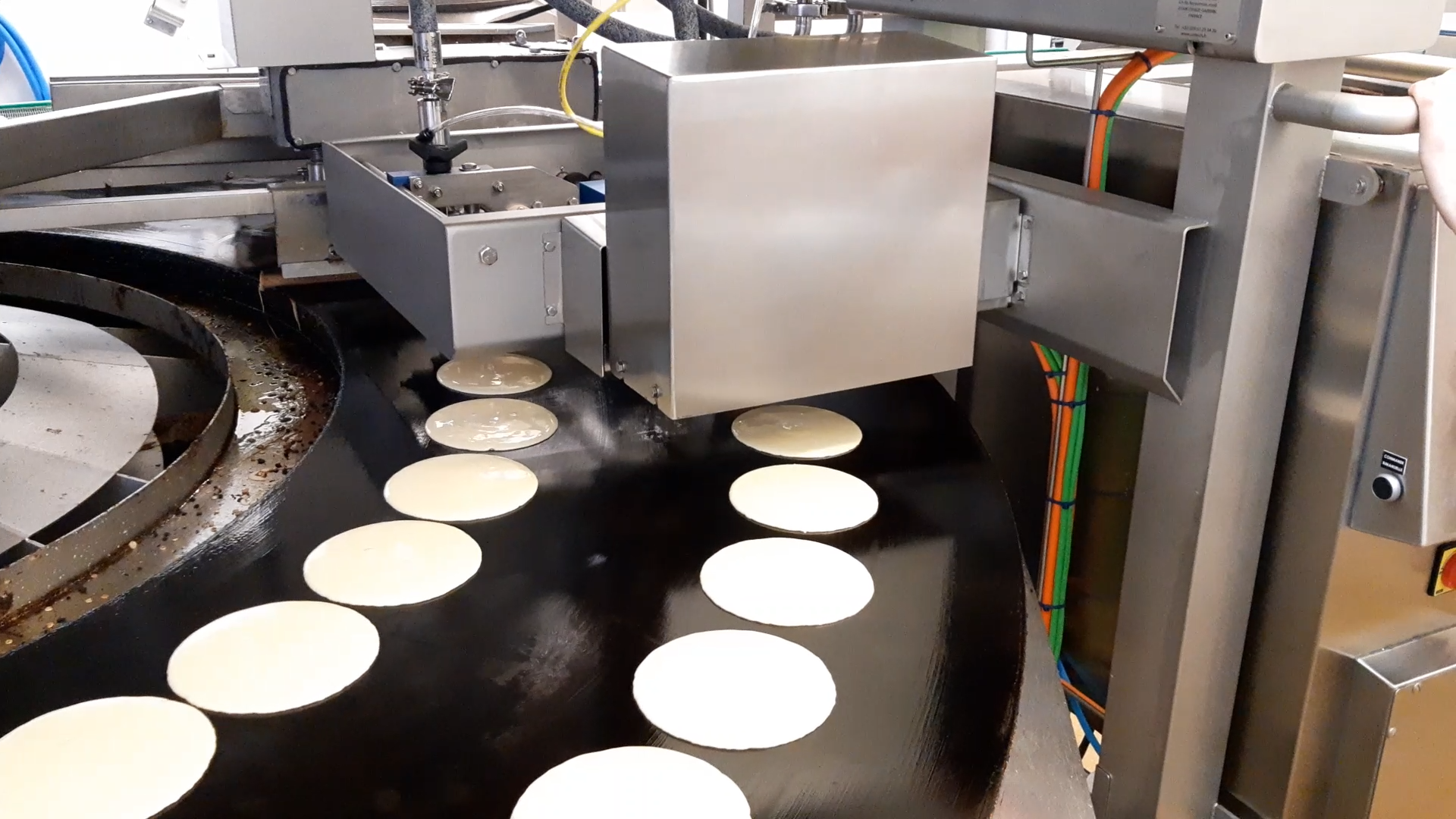
1. How Food Dosing Affects Overall Production Line Performance
Dosing performance depends on the entire production line. Even a high-speed dosing machine can limit throughput if product feeding, container handling, and packaging equipment are not perfectly coordinated.
The dosing cycle must be synchronized with tray denesting, conveyor movements, sealing, inspection, and packaging. The line must also ensure a consistent product supply and precise container positioning to achieve uniform portions and clean deposits.
Nozzle design and movement must be adapted to both the product and the container. This helps limit splashing, smearing, off-center deposits, and uneven distribution of product pieces.
The performance of food dosing and industrial dosing equipment therefore depends directly on its ability to operate efficiently with the surrounding machinery.
2. The Risks of Considering Dosing Too Late
When dosing is only addressed after the line layout, conveyors, utilities, and safety systems have already been defined, manufacturers may be forced to accept technical compromises.
Insufficient space can make installation, cleaning, maintenance, and product or format changeovers more difficult. Unsuitable conveyors can also affect container stability and dosing accuracy, while existing pumps, hoppers, or pipework may not be compatible with the selected technology.
Late-stage modifications generally increase capital expenditure, extend commissioning time, and reduce the line’s ability to accommodate new recipes, new container formats, or future increases in production speed.
Considering dosing too late can therefore affect hygiene, productivity, flexibility, and long-term line performance.
3. How Celtech Integrates Dosing into Complete Food Production Lines
Celtech considers dosing equipment an essential part of the production process. Each solution is defined according to the product, container, required throughput, and actual operating conditions.
Product characteristics such as texture, viscosity, temperature, portion volume, and the possible presence of particulates help determine the most suitable dosing technology, tooling, and configuration.
Container format, production speed, available space, and surrounding equipment are also taken into account to define the number of dosing heads, nozzle design, and required movements.
Where relevant, trials can be carried out using the customer’s actual product to assess dosing accuracy, deposit quality, and product behavior before installation.
Celtech can supply stand-alone food dosing machines or integrate its equipment into a complete food production line. Through Velec Group, dosing solutions can be combined with tray denesting systems, conveyors, robotic handling equipment, inspection systems, and packaging equipment.
This approach ensures that the solution is designed around the product and its production environment, rather than treating the dosing machine as an isolated piece of equipment.
Dosing directly affects production speed, cleanliness, portion accuracy, product quality, and process stability.
Defining food dosing requirements from the beginning of a project helps avoid costly late-stage modifications while improving accessibility, hygiene, flexibility, and future scalability.
The most effective dosing solution cannot be selected independently from the rest of the line. It must be designed around the actual product and its production environment.
Are you designing a new line or looking to modernize an existing installation?
Involve Celtech from the earliest design stages. Our teams assess your product characteristics, carry out dosing trials where necessary, evaluate deposit quality, and develop a solution adapted to your production process.